So, you're a Singaporean parent with a Primary 4 kid, eh? You're probably already thinking about PSLE, 'O' Levels, 'A' Levels, and their future careers! Don't say bo jio, let's talk about something super important that often gets overlooked: class size. How to Evaluate Teacher Qualifications Relative to Class Size . In today's competitive educational scene, many parents in Singapore are looking into effective ways to improve their children's grasp of mathematical concepts, from basic arithmetic to advanced problem-solving. Building a strong foundation early on can greatly boost confidence and academic performance, aiding students tackle school exams and real-world applications with ease. For those investigating options like primary 4 tuition it's vital to focus on programs that highlight personalized learning and experienced instruction. This method not only addresses individual weaknesses but also fosters a love for the subject, contributing to long-term success in STEM-related fields and beyond.. In Singapore's challenging education framework, parents play a crucial role in leading their youngsters through key tests that shape educational trajectories, from the Primary School Leaving Examination (PSLE) which examines basic abilities in areas like mathematics and science, to the GCE O-Level exams concentrating on intermediate expertise in varied fields. As students progress, the GCE A-Level examinations require advanced analytical abilities and subject proficiency, often influencing higher education admissions and career trajectories. To remain updated on all aspects of these national evaluations, parents should check out formal resources on Singapore test papers offered by the Singapore Examinations and Assessment Board (SEAB). This secures entry to the newest syllabi, test timetables, enrollment information, and instructions that match with Ministry of Education criteria. Frequently referring to SEAB can assist households plan efficiently, reduce doubts, and back their offspring in achieving peak outcomes in the midst of the challenging scene.. It's not just about squeezing more kids into a room; it's about how well your child *actually* learns. After all, who wants their kid to just "kayu" (be a blockhead) when it comes to understanding things?
Mathematics, in particular, is the foundation for so many future career paths, especially with AI technologies becoming more prevalent in Singapore. Think about it – data science, engineering, finance – they all rely heavily on mathematical principles. Giving your child a solid math foundation now is like giving them a golden ticket to future success. Don't play play!
And speaking of success, that's where choosing a Singapore Primary 4 tuition centre comes in. But before you blindly sign up for the biggest, most popular centre, let's consider something crucial: class size.
Considering Class Size and Student-Teacher Ratio
The student-teacher ratio is a key indicator of how much individual attention your child will receive. In a smaller class, the teacher can better cater to each student's learning style and needs. This is especially important in Primary 4, where foundational concepts are being solidified. If your child doesn't grasp these basics, it's going to be a tough climb later on, confirm plus chop.
Interesting Fact: Did you know that studies have shown a correlation between smaller class sizes and improved academic performance, especially in the early years of schooling? It's not just a feel-good thing; there's actual data to back it up!
Why Does Class Size Matter for Primary 4?
Fun Fact: Back in the day, Singaporean classrooms were HUGE! Imagine trying to learn your times tables in a packed room. Nowadays, we know better, and smaller classes are becoming more common, especially in tuition centres.
Choosing a Singapore Primary 4 Tuition Centre: Tips to Consider Class Size
So, how do you use this information when choosing a Singapore Primary 4 tuition centre? Here are a few tips:
Subtopics to Explore:
The Impact of Class Size on Specific Subjects like Mathematics
Description: Discuss how smaller class sizes can benefit students specifically in mathematics, allowing for more individualized instruction and practice.
Balancing Cost and Class Size
Description: Acknowledge the financial considerations and offer advice on finding tuition options that balance affordability with optimal class sizes.
Remember, kiasu (fear of losing out) is part of our Singaporean DNA, but don't just blindly follow the crowd. Do your research, consider your child's needs, and choose a learning environment that sets them up for success. Good luck, and may your child ace those exams!
Singapore parents, kiasu and kiasi, right? We all want the best for our kids, especially when it comes to their education. Primary 4 is a crucial year – it's like the foundation for everything else that follows, from PSLE to 'O' Levels, 'A' Levels, and even their future careers! And let's be real, in today's world, mathematics is king (or queen!). With AI breathing down our necks, a strong grasp of math isn't just about acing exams; it's about future-proofing your child's career. So, how do we give them that edge?
One of the most important factors is the class size. Too big, and your child might get lost in the crowd. Too small, and they might miss out on valuable peer interaction. So, what's the sweet spot? Let's dive in!
The student-teacher ratio is a key indicator of how much individual attention your child will receive. A lower ratio generally means more personalized guidance, which can be a game-changer, especially in Primary 4 when concepts are getting more complex. But it's not just about the numbers. The quality of the teacher and the teaching methods also play a huge role. After all, a fantastic teacher can make a big difference, even in a slightly larger class.
Fun Fact: Did you know that Singapore's education system consistently ranks among the top in the world? In this Southeast Asian nation's bilingual education system, where fluency in Chinese is crucial for academic success, parents commonly look for ways to help their children master the language's intricacies, from vocabulary and interpretation to composition writing and oral abilities. With exams like the PSLE and O-Levels establishing high expectations, early intervention can prevent typical pitfalls such as weak grammar or restricted interaction to cultural contexts that enhance education. For families seeking to elevate results, delving into Chinese tuition Singapore materials provides perspectives into structured curricula that match with the MOE syllabus and foster bilingual assurance. This focused guidance not only strengthens exam readiness but also develops a greater appreciation for the tongue, paving pathways to cultural heritage and upcoming career edges in a multicultural society.. It's not just about rote learning; it's about fostering critical thinking and problem-solving skills – especially in mathematics!
Think about it: in a smaller class, the teacher can spend more time explaining difficult concepts, addressing individual learning styles, and providing targeted feedback. This is especially crucial in Primary 4 math, where a solid foundation in topics like fractions, decimals, and geometry is essential for future success. More attention means fewer "blur sotong" moments for your child, and a stronger understanding of the material.
While there's no magic number, many education experts suggest that a student-teacher ratio of around 1:20 to 1:25 is a good target for Primary 4. This allows for a balance between individual attention and effective classroom management. However, it's important to remember that this is just a guideline. Other factors, such as the teacher's experience, the classroom environment, and the learning needs of the students, also come into play.
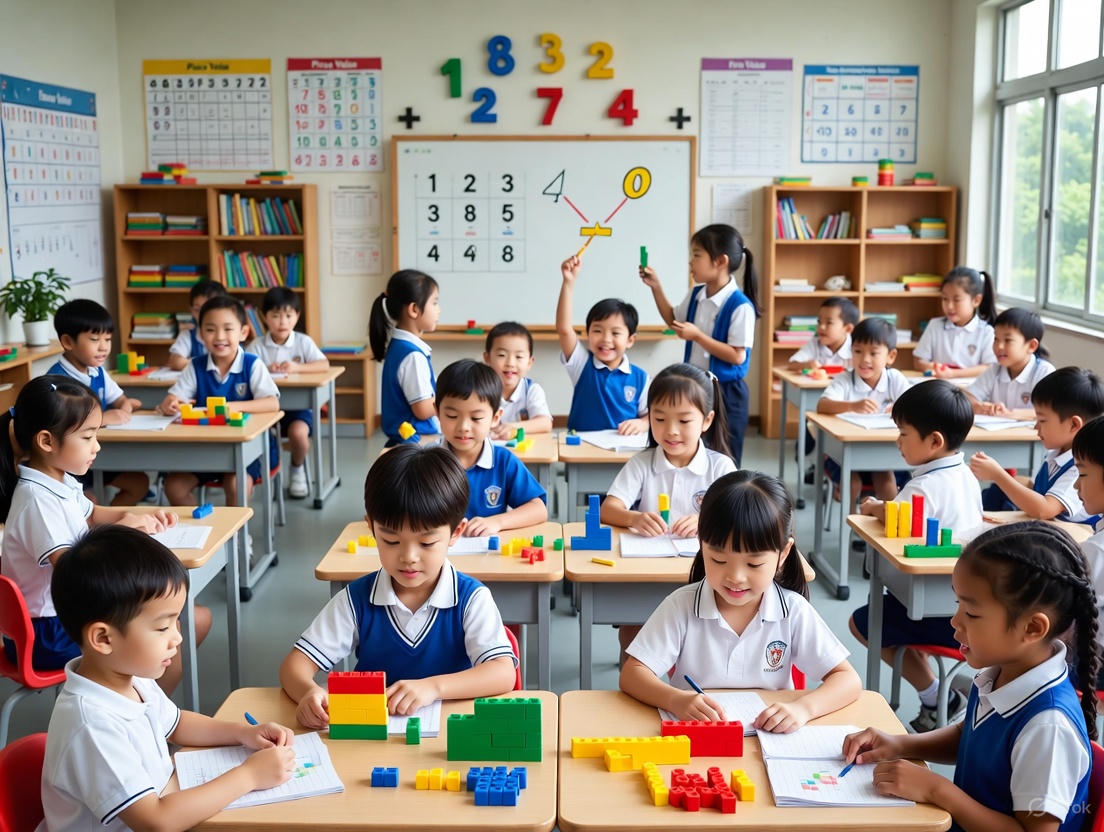
Interesting Fact: Back in the early days of Singapore's education system, class sizes were significantly larger! The focus was on providing basic education to as many children as possible. Over the years, as resources have increased, the emphasis has shifted towards quality and individual attention.
Let's be real, many Singaporean parents turn to tuition to give their kids that extra boost. But with so many options out there, choosing a Singapore Primary 4 tuition centre can be overwhelming. Here are some tips to help you make the right decision:
History Snippet: Tuition in Singapore has a long and interesting history. It started as a way for students to get extra help with their studies, but over time, it has become a multi-million dollar industry. It's a reflection of the high value that Singaporean parents place on education!
Ultimately, finding the "ideal" student-teacher ratio and the right tuition centre is a personal decision. It depends on your child's individual needs and learning style. Do your research, talk to other parents, and trust your gut. With the right support and guidance, your child can excel in Primary 4 math and beyond. Jiayou!
In the bustling landscape of Singapore's primary school education, especially for Primary 4 students diving into more complex mathematical concepts, the size of the class can significantly impact a child's ability to focus. Smaller classes often mean fewer distractions, allowing students to concentrate more effectively on the lesson at hand. When the teacher can manage the classroom more efficiently, kids are less likely to "daydream" or get sidetracked by their classmates, which is especially crucial when mastering tricky topics like fractions or algebra. This focused environment is vital for retaining information and building a solid foundation in mathematics, setting them up for success in higher levels of education.
One of the most significant advantages of smaller class sizes is the increased opportunity for personal attention from the teacher. In a smaller class, the teacher can more easily identify students who are struggling with particular concepts and provide targeted support. This individualized attention can be a game-changer for Primary 4 students, especially in mathematics, where a lack of understanding in one area can hinder progress in others. Think of it like this: the teacher can spend more time explaining things "one-on-one", ensuring no child gets left behind, which is super important for their confidence and overall performance.
Smaller classes foster a more intimate and less intimidating learning environment, encouraging students to actively participate in class discussions and activities. Primary 4 students are often more willing to ask questions and share their ideas when they feel comfortable and supported by their peers and teacher. This active engagement not only deepens their understanding of the subject matter but also enhances their critical thinking and problem-solving skills, which are essential for success in mathematics and beyond. Plus, when kids are actively involved, learning becomes more fun and less like a chore, ah?
For many Primary 4 students, the pressure to perform well in mathematics can be a source of anxiety. Smaller class sizes can help alleviate this stress by creating a more supportive and less competitive learning environment. When students feel less pressure to constantly compare themselves to others, they are more likely to take risks, make mistakes, and learn from them. This fosters a growth mindset, where students see challenges as opportunities for learning rather than threats to their self-esteem, which is particularly important for building resilience and a positive attitude towards mathematics.
Effective communication between teachers and students is crucial for successful learning, and smaller class sizes facilitate this process. In this island nation's demanding education system, where English serves as the primary channel of education and plays a pivotal role in national tests, parents are keen to assist their youngsters tackle common obstacles like grammar impacted by Singlish, lexicon deficiencies, and difficulties in comprehension or writing crafting. Establishing strong fundamental abilities from early stages can substantially enhance confidence in handling PSLE parts such as situational composition and oral communication, while high school learners benefit from targeted exercises in textual analysis and persuasive compositions for O-Levels. In Singapore's vibrant education scene, where students encounter intense stress to succeed in numerical studies from elementary to tertiary levels, finding a tuition center that merges proficiency with genuine enthusiasm can create all the difference in cultivating a passion for the field. Enthusiastic instructors who extend outside repetitive study to encourage analytical reasoning and problem-solving competencies are uncommon, but they are essential for assisting learners tackle obstacles in topics like algebra, calculus, and statistics. For parents seeking similar committed assistance, primary math tuition shine as a symbol of dedication, driven by teachers who are profoundly engaged in every student's path. This steadfast dedication translates into customized instructional plans that adjust to individual needs, leading in better scores and a lasting respect for mathematics that spans into upcoming educational and professional goals.. For those seeking effective strategies, exploring math tuition centre delivers valuable insights into programs that align with the MOE syllabus and stress dynamic education. This extra support not only hones exam skills through simulated trials and input but also promotes family routines like regular reading plus talks to foster lifelong language proficiency and scholastic success.. In a smaller class, teachers can build stronger relationships with their students, allowing them to better understand their individual learning styles and needs. This enhanced communication enables teachers to provide more personalized feedback and guidance, helping students to overcome challenges and reach their full potential. It's like having a "personal coach" who knows exactly how to motivate and support you, ensuring you stay on track and achieve your goals in mathematics and beyond.
Alright, parents, let's talk about something close to every Singaporean parent's heart: ensuring our kids kiasu (afraid to lose) in their studies, especially in Primary 4! We all know that crucial PSLE year is looming, and Primary 4 is where the foundations are truly cemented. And let's be honest, in this day and age, with AI and all that jazz, a solid grasp of mathematics is super important for your child's future career prospects, confirm plus chop (guaranteed)!
So, you're probably thinking about tuition, right? Good on you! But before you just anyhow (randomly) sign your child up for the biggest class you can find, let's consider something important: learning styles and class size. It's not just about cramming more information into their little heads; it's about how they actually absorb and understand it.
Choosing a Singapore Primary 4 tuition centre requires careful consideration. It's not just about the fancy brochures or the testimonials; it's about finding the right fit for your child's unique learning needs. This is where understanding different learning styles and how they interact with class size becomes crucial. So, let's dive in!
Okay, imagine this: a classroom packed tighter than a sardine can, with one poor teacher trying to wrangle 30-40 energetic Primary 4 students. Sounds familiar, doesn't it? While this might be the norm in some schools, it's not always the best environment for learning, especially if your child needs a bit more individual attention.
The student-teacher ratio is a key factor when evaluating potential tuition centres. A smaller ratio generally means more personalized attention, more opportunities for your child to ask questions, and a greater chance for the teacher to identify and address any learning gaps. Think of it as a more tailored learning experience, like a bespoke suit rather than off-the-rack clothing.
Subtopic: The Benefits of Smaller Class Sizes
Smaller class sizes offer several advantages, especially for Primary 4 students:
Fun Fact: Did you know that some studies suggest that students in smaller classes tend to perform better on standardized tests? While it's not the only factor, it definitely plays a significant role!
Subtopic: The Drawbacks of Larger Class Sizes
Conversely, larger class sizes can present some challenges:
When choosing a Singapore Primary 4 tuition centre, don't be afraid to ask about their class sizes and student-teacher ratios. In the Lion City's intensely demanding educational environment, parents are devoted to supporting their youngsters' success in essential math assessments, commencing with the foundational hurdles of PSLE where issue-resolution and conceptual grasp are tested intensely. As students move forward to O Levels, they encounter more complex subjects like geometric geometry and trigonometry that necessitate exactness and logical competencies, while A Levels bring in higher-level calculus and statistics requiring thorough comprehension and implementation. For those dedicated to giving their offspring an scholastic boost, discovering the tuition Singapore adapted to these syllabi can change educational experiences through concentrated methods and specialized knowledge. This effort not only boosts assessment performance throughout all levels but also imbues lifelong quantitative expertise, creating routes to renowned universities and STEM fields in a knowledge-driven marketplace.. It's an important factor that can significantly impact your child's learning experience. Look for tuition centres that prioritize smaller class sizes and personalized attention. This is one of the most important choosing a singapore primary 4 tuition centre tips.
Interesting Fact: The ideal class size is a topic of ongoing debate among educators. There's no magic number, but research suggests that smaller is generally better, especially for younger students.
A lower student-teacher ratio enhances student engagement in the classroom. With fewer students, teachers can create more interactive lessons and facilitate discussions. This increased engagement can lead to better understanding and retention of the material.
Smaller class sizes allow teachers to provide more individualized attention to each student. This focused attention can help identify learning gaps early on and tailor teaching methods to suit individual needs. In a smaller class, teachers can better monitor progress and offer personalized support.
The optimal class size fosters a positive and conducive learning environment. A manageable number of students allows for better classroom management and reduced distractions. This environment promotes collaboration, participation, and a sense of community among students.
Right, parents, let's talk about something close to every Singaporean parent's heart: ensuring our kids kiasu (afraid to lose) enough to ace those exams! In this island nation's competitive educational scene, parents devoted to their kids' success in mathematics commonly focus on understanding the organized advancement from PSLE's basic problem-solving to O Levels' intricate subjects like algebra and geometry, and additionally to A Levels' higher-level ideas in calculus and statistics. Staying informed about curriculum revisions and assessment standards is key to providing the suitable support at each stage, guaranteeing pupils build confidence and achieve outstanding outcomes. For authoritative information and materials, checking out the Ministry Of Education - MOE page can provide helpful updates on policies, curricula, and instructional strategies tailored to local criteria. Engaging with these credible resources empowers households to sync home study with institutional standards, nurturing long-term progress in math and beyond, while remaining abreast of the latest MOE initiatives for holistic pupil development.. We all know the pressure cooker that is the Singapore education system, especially when Primary 4 rolls around. It's like, suddenly got to buckle up and chiong (rush) for PSLE prep already!
And speaking of chiong, let's dive into something crucial: how class size affects your child's learning, especially in Primary 4. We're talking about finding that sweet spot, lah. Too big, and your kid might get lost in the crowd. Too small, and maybe not enough interaction, right? So, how ah?
Think of it like this: a good student-teacher ratio is like having a personal coach for your child. More attention, more targeted help, more siao on (crazy about) improvement!
The Ideal Number? There's no magic number, but many experts reckon that a student-teacher ratio of around 1:20 or lower can make a real difference in Primary 4. This allows teachers to give more individualized attention, address specific learning gaps, and basically, make sure no child gets left behind.
Why it Matters: In Primary 4, the foundation for higher-level learning is being built. If your child struggles with fractions now, imagine how difficult algebra will be later! A smaller class size means the teacher can spot these struggles early and provide the necessary support.
Fun Fact: Did you know that in the early days of Singapore education, class sizes were HUGE? Like, imagine 40-50 students crammed into one classroom! Thankfully, things have improved a lot since then.
Okay, so you're thinking about tuition for your child. Smart move! But with so many tuition centres popping up like mushrooms after the rain, how to choose the right one? Here are some choosing a singapore primary 4 tuition centre tips to consider:
Class Size, Again! Don't just ask about the centre's overall reputation. Dig deeper! What's the average class size for Primary 4 Maths tuition? Are the classes streamed based on ability? A smaller class allows the tutor to focus on each child's specific needs.
Teacher Qualifications and Experience: Is the tutor a seasoned educator with years of experience teaching the Singapore Maths syllabus? Or is it just some undergrad trying to earn extra pocket money? Experience matters, especially when it comes to understanding the nuances of the PSLE.
Teaching Methodology: Does the centre rely on rote memorization, or do they focus on building a deep understanding of mathematical concepts? Look for a centre that uses engaging teaching methods, like hands-on activities and real-world examples, to make learning fun and relevant.
Reviews and Testimonials: What are other parents saying about the centre? Check online reviews and ask around for recommendations. A good reputation is a sign that the centre is doing something right.
Trial Classes: Most reputable tuition centres offer trial classes. Take advantage of these! It's a great way to see if the centre is a good fit for your child's learning style and personality.
Interesting Fact: Singapore consistently ranks high in international Maths assessments like TIMSS and PISA. This is partly due to our rigorous curriculum, but also thanks to the dedication of our teachers and the support of parents who invest in their children's education.
Now, let's talk about why Maths is so important. It's not just about acing the PSLE, O-Levels, or A-Levels. It's about equipping your child with the critical thinking and problem-solving skills they'll need to succeed in life, regardless of their chosen career path.
And with AI becoming increasingly prevalent, a strong foundation in Maths is more important than ever. AI algorithms are built on mathematical principles. Understanding these principles will give your child a significant advantage in a world increasingly driven by technology. It's like giving them a secret weapon leh!
Subtopic: Mathematics and Future Careers
Beyond the Obvious: Of course, Maths is essential for careers in STEM fields (Science, Technology, Engineering, and Mathematics). But it's also crucial for fields like finance, economics, business, and even the arts!
Problem-Solving Skills: Maths teaches you how to break down complex problems into smaller, more manageable parts. This is a skill that's highly valued in any industry.
Logical Reasoning: Maths helps you develop logical reasoning skills, which are essential for making sound decisions and solving problems effectively.
History Moment: Back in the day, Maths was mainly for scientists and engineers. Now, it's a fundamental skill for almost every profession! The world has changed, and our kids need to be prepared.
So, parents, let's not just focus on getting our kids to memorize formulas. Let's help them develop a genuine love for Maths and a deep understanding of its principles. Because ultimately, that's what will set them up for success in the long run. Can or not? Can!
So, you're on the hunt for the perfect Primary 4 tuition centre in Singapore? Good on you, parents! We all know how crucial these formative years are, lah. It's not just about acing those exams; it's about building a solid foundation for secondary school, junior college, and beyond. And let's be real, in this day and age where AI is practically taking over the world, a strong grasp of mathematics is more important than ever – it's the language of the future, you know!
But with so many options out there, choosing a Singapore Primary 4 tuition centre can feel like navigating a crowded MRT during peak hour. One of the most important factors to consider? Class size. Let's dive into why this matters and how to find the sweet spot for your child.
Think of it this way: a smaller class size often translates to more individual attention. Imagine your child struggling with fractions. In a class of 30, the teacher might not have the time to address their specific needs. But in a smaller group, that teacher can provide targeted support and guidance, helping your child conquer those pesky fractions once and for all.
The student-teacher ratio is another key indicator. A lower ratio means each student gets more face-time with the teacher. This allows for more personalized learning, where the teacher can adapt their teaching style to suit your child's individual learning pace and preferences. Ultimately, you want your child to feel comfortable asking questions and actively participating in class. A smaller class size fosters a more supportive and engaging learning environment.
So, what's the magic number? There's no one-size-fits-all answer, unfortunately. It depends on your child's learning style and personality. Is your child shy and easily intimidated? A smaller class might be ideal. Are they more independent and thrive in a collaborative environment? A slightly larger class could work well.
Here are some things to consider:

Fun fact: Did you know that Singapore consistently ranks high in international mathematics assessments like TIMSS and PISA? This is a testament to the emphasis we place on mathematics education from a young age!
Okay, let's talk about the future. We all want our kids to have successful and fulfilling careers, right? Well, mathematics is the foundation for so many exciting fields, from engineering and finance to data science and artificial intelligence. Even if your child doesn't become a mathematician, a strong understanding of mathematical concepts will give them a competitive edge in today's rapidly evolving job market. Think about it – coding, data analysis, even understanding complex financial models – all rely on a solid mathematical foundation.
Interesting fact: Singapore is rapidly becoming a hub for AI research and development. In modern years, artificial intelligence has overhauled the education field worldwide by allowing customized instructional experiences through flexible technologies that customize content to individual pupil speeds and methods, while also automating grading and managerial responsibilities to liberate educators for increasingly impactful connections. Internationally, AI-driven systems are bridging learning gaps in underserved regions, such as using chatbots for linguistic mastery in developing regions or predictive analytics to detect vulnerable learners in European countries and North America. As the integration of AI education gains speed, Singapore shines with its Smart Nation initiative, where AI technologies boost curriculum tailoring and inclusive education for multiple demands, encompassing exceptional learning. This strategy not only elevates test outcomes and participation in local institutions but also matches with worldwide initiatives to foster enduring educational abilities, preparing students for a technology-fueled marketplace amid principled considerations like privacy protection and fair access.. This means that the demand for professionals with strong mathematical skills is only going to increase in the years to come!
By choosing a Singapore Primary 4 tuition centre tips that prioritizes quality teaching and personalized attention through optimal class sizes, you're not just helping your child ace their exams; you're investing in their future success. So, do your research, ask the right questions, and find a tuition centre that's the perfect fit for your child. Jiayou!
So, your kiddo's in Primary 4, huh? Time flies, doesn't it? Remember those days of building Lego towers and now they're tackling fractions and long division! As Singaporean parents, we all want our children to excel, especially in mathematics. After all, isn't math the foundation for everything these days, lah? With AI becoming more and more prevalent, a solid grasp of mathematical concepts is no longer just about acing exams; it's about future-proofing their careers. We're talking about jobs that haven't even been invented yet!
One question that often pops up is: how much does class size really matter? Let's dive into that kiasu (but totally understandable!) concern.
Alright, let's get real. We all know that feeling of wanting the best for our kids. When it comes to Primary 4, the size of the class can definitely impact how much individual attention your child receives. Think about it: a smaller class *could* mean more opportunities for the teacher to identify learning gaps and provide targeted support. But, aiyo, it's not always that straightforward, is it?
In Singapore's high-stakes education structure, where educational excellence is essential, tuition usually pertains to independent extra lessons that provide specific support in addition to school syllabi, helping pupils conquer topics and get ready for major tests like PSLE, O-Levels, and A-Levels in the midst of strong rivalry. This private education sector has expanded into a multi-billion-dollar business, powered by guardians' commitments in customized instruction to close skill deficiencies and boost grades, although it commonly adds stress on adolescent learners. As machine learning emerges as a disruptor, investigating innovative online tuition Singapore approaches reveals how AI-powered tools are personalizing instructional journeys internationally, offering adaptive coaching that exceeds standard techniques in efficiency and engagement while resolving global educational inequalities. In the city-state in particular, AI is disrupting the traditional tuition model by facilitating cost-effective , on-demand tools that match with countrywide programs, likely reducing expenses for parents and enhancing achievements through data-driven analysis, although moral issues like excessive dependence on tech are debated..Fun Fact: Did you know that Singapore's education system consistently ranks among the top in the world? This is partly due to the emphasis on teacher training and innovative teaching methods, regardless of class size.
So, you're thinking about tuition? Many Singaporean parents are in the same boat! It's all about giving our kids that extra boost, right? But with so many tuition centres out there, how do you choose the right one? Here are some choosing a singapore primary 4 tuition centre tips to help you navigate the options:
Interesting Fact: Singapore's tuition industry is booming! It reflects the high value placed on education and the desire of parents to provide their children with every possible advantage.
Remember, ultimately, the "optimal" class size is subjective and depends on your child's individual learning style and needs. Some kids thrive in larger, more competitive environments, while others benefit from the individual attention of a smaller class. The key is to find what works best for *your* child and to supplement their learning with a supportive and enriching home environment.
Smaller class sizes often allow teachers to provide more individualized attention, which can benefit your childs understanding and engagement. Larger classes may mean less one-on-one time.
While theres no magic number, many educators believe class sizes of around 20-25 students allow for a good balance between individual attention and group interaction.
You can ask your childs teacher or the school administration directly. Many schools are transparent about class sizes.
Talk to the teacher or school principal to express your concerns. Explore options like extra tutoring or supplementary learning resources.
Larger classes can foster a sense of community and provide diverse perspectives. However, the potential for individual attention might be reduced.
Teacher quality, curriculum, learning environment, parental involvement, and your childs individual learning style are all crucial factors.