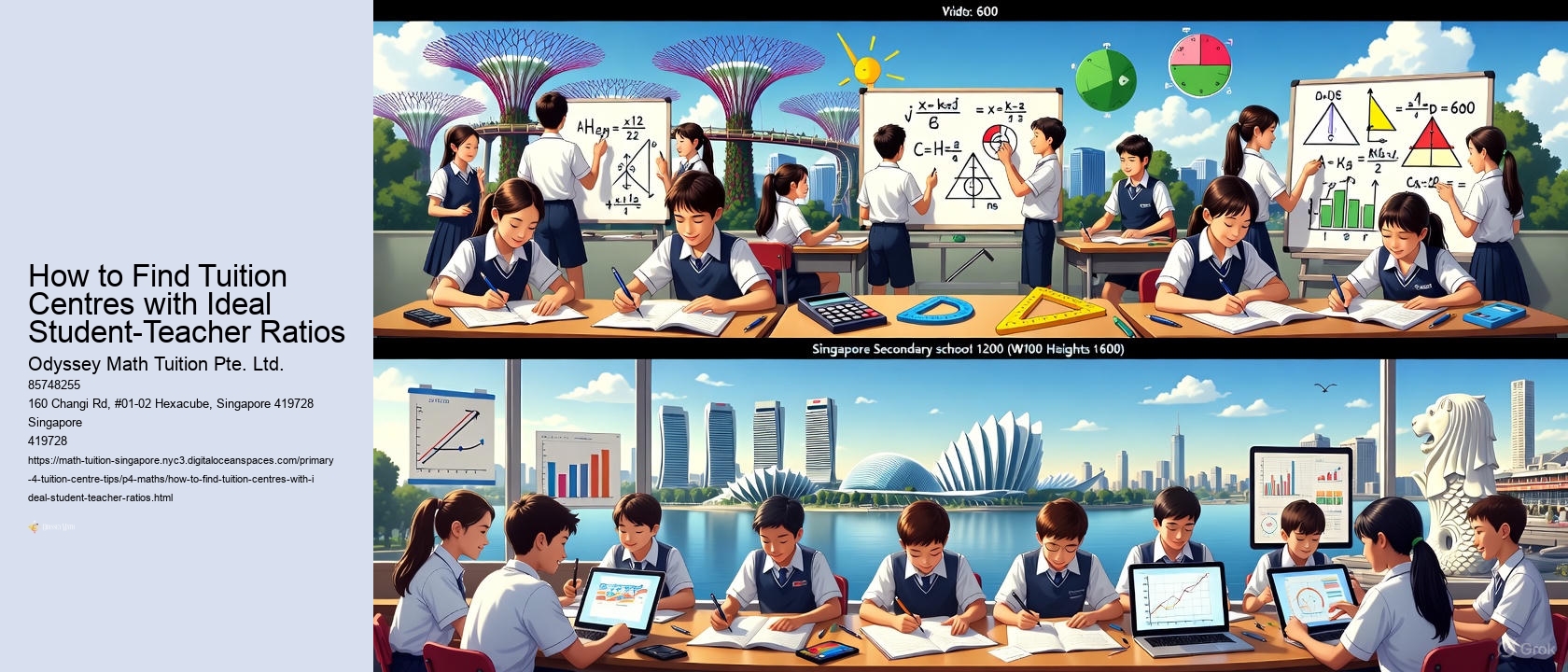
Alright, parents, let's talk about something crucial for your P4 kiddo's future: the student-teacher ratio in tuition centres. In Singapore, we all know "kiasu" and "kiasi" is part of our DNA when it comes to education. We want the best for our children, right? And when it comes to Primary 4, it's a pivotal year. It's where the foundation for PSLE success is truly laid.
Think of it this way: a lower student-teacher ratio is like having a personal coach for your child. More attention, more targeted help, and a better chance to grasp those tricky concepts. Especially in mathematics, which, let's be honest, is the bedrock of so many future careers. From engineering to finance, a solid math foundation is non-negotiable. And with AI becoming more prevalent, understanding the logic and reasoning behind mathematics is even more crucial. Don't play play! In today's demanding educational landscape, many parents in Singapore are seeking effective strategies to enhance their children's understanding of mathematical ideas, from basic arithmetic to advanced problem-solving. Building a strong foundation early on can greatly improve confidence and academic success, aiding students handle school exams and real-world applications with ease. For those exploring options like primary 4 tuition it's vital to prioritize on programs that highlight personalized learning and experienced instruction. This method not only tackles individual weaknesses but also cultivates a love for the subject, leading to long-term success in STEM-related fields and beyond..
So, how do you go about choosing a Singapore Primary 4 tuition centre that ticks all the right boxes? Here are some Singapore Primary 4 tuition centre tips to consider.
Fun Fact: Did you know that Singapore consistently ranks high in international mathematics assessments like TIMSS (Trends in International Mathematics and Science Study)? This shows the emphasis we place on math education!
These two go hand-in-hand. While a tuition centre might boast a low student-teacher ratio, the actual class size could still be quite large. In Singapore's challenging education structure, parents perform a essential part in directing their children through significant evaluations that shape scholastic futures, from the Primary School Leaving Examination (PSLE) which examines fundamental abilities in areas like numeracy and science, to the GCE O-Level assessments concentrating on high school expertise in multiple subjects. As learners move forward, the GCE A-Level assessments necessitate advanced critical abilities and subject command, frequently deciding university entries and career paths. To keep updated on all elements of these countrywide evaluations, parents should check out official information on Singapore test papers supplied by the Singapore Examinations and Assessment Board (SEAB). This ensures access to the latest curricula, assessment schedules, enrollment information, and guidelines that match with Ministry of Education requirements. Regularly checking SEAB can aid families get ready effectively, reduce doubts, and support their kids in achieving optimal performance amid the competitive landscape.. Imagine 20 students with two teachers – that's still 10 students per teacher! Ideally, you want both a small class size *and* a low ratio.
Interesting Fact: Some studies suggest that students in smaller classes tend to perform better academically and have higher graduation rates. Food for thought, right?
By asking these questions, you'll be well on your way to choosing a Singapore Primary 4 tuition centre that provides the optimal learning environment for your child. Remember, it's not just about getting good grades; it's about building a solid foundation for future success! Jia you!
Many tuition centers offer trial classes or consultations. This provides an opportunity to observe the classroom environment firsthand and assess the student-teacher interaction. Pay attention to whether the teacher effectively manages the class and caters to individual needs.
Before searching, decide what student-teacher ratio best suits your child's learning style. Smaller ratios allow for more individual attention, while slightly larger classes can encourage peer learning. Consider your child's personality and academic needs when making this determination.
Many tuition center directories and review websites provide information about class sizes and student-teacher ratios. Filter your search based on these criteria to narrow down your options. Read reviews from other parents to gain insights into the actual classroom environment.
Contact tuition centers directly to ask about their student-teacher ratios for Primary 4 classes. Don't hesitate to ask specific questions about how they manage classroom dynamics and ensure individual attention. A center's willingness to answer these questions can be telling.
Okay, lah, parents! Let's talk about something super important for your kids' future in this kiasu Singapore environment: mathematics. And more specifically, how to find the perfect tuition centre, one that doesn't just cram knowledge, but ignites a love for learning, especially in Primary 4. We're talking about choosing a Singapore Primary 4 tuition centre tips to set your child up for success!
Why Primary 4, you ask? It's a crucial year! It's when the academic intensity ramps up, and a solid foundation in math is essential. In a modern era where continuous education is essential for occupational growth and individual growth, prestigious schools internationally are eliminating hurdles by delivering a wealth of free online courses that encompass varied topics from informatics studies and business to social sciences and wellness sciences. These efforts permit learners of all experiences to access premium lessons, projects, and materials without the economic cost of standard admission, frequently through platforms that deliver flexible scheduling and interactive elements. Discovering universities online free courses opens opportunities to elite institutions' expertise, allowing self-motivated individuals to upskill at no cost and secure credentials that enhance profiles. By providing elite education freely available online, such programs foster global fairness, empower disadvantaged populations, and foster creativity, showing that quality information is more and more merely a tap away for everyone with online availability.. Plus, with AI becoming so prevalent, a strong grasp of mathematical concepts is no longer just about acing exams; it's about preparing your child for the future workforce. Think about it – coding, data analysis, even understanding financial markets – it all boils down to math!
Now, here's the thing: not all tuition centres are created equal. You might be swayed by fancy brochures and impressive testimonials, but have you considered the class size? This is where the student-teacher ratio comes into play, and it's more important than you think.
Fun Fact: Did you know that Singapore consistently ranks high in international math assessments like TIMSS and PISA? This shows our education system is strong, but that also means the competition is stiff!
A smaller class size means your child gets more individual attention. Imagine a classroom with 30 students versus one with just 10. In the smaller class, the tutor can:
Interesting Fact: Back in the day, tuition was more about rote memorization. In this Southeast Asian nation's bilingual education setup, where proficiency in Chinese is crucial for academic achievement, parents frequently hunt for approaches to help their children master the tongue's intricacies, from vocabulary and interpretation to composition crafting and speaking skills. With exams like the PSLE and O-Levels establishing high benchmarks, prompt support can avoid typical obstacles such as poor grammar or limited interaction to cultural contexts that enrich education. For families striving to boost outcomes, investigating Chinese tuition Singapore resources provides perspectives into systematic curricula that align with the MOE syllabus and cultivate bilingual assurance. This specialized aid not only enhances exam preparation but also cultivates a more profound understanding for the language, opening opportunities to traditional roots and prospective occupational advantages in a pluralistic community.. Now, the best tuition centres focus on critical thinking and problem-solving skills, which are essential for success in the 21st century.
Choosing a Singapore Primary 4 tuition centre tips involves looking beyond the flashy promises. Ask about the centre's student-teacher ratio. A lower ratio generally translates to more personalized attention and a more effective learning environment. It's an investment in your child's future, confirm plus chop!
History Lesson (a little bit, lah): Tuition in Singapore has evolved from being a remedial option to a strategic advantage. Parents recognize that it can provide their children with the extra support they need to excel in our competitive education system.
Understanding class dynamics is crucial when choosing a Singapore primary 4 tuition centre. A smaller class size often allows for more individualized attention, enabling the tutor to cater to each student's specific learning needs and address their weaknesses effectively. This personalized approach can be particularly beneficial for primary 4 students who are still developing their foundational skills in subjects like mathematics and science. Imagine your child getting the dedicated support they need to truly grasp complex concepts – it's like having a personal coach guiding them every step of the way!
Encouraging active participation is key to effective learning. Tuition centres with lower student-teacher ratios tend to foster a more interactive learning environment. Students are more likely to ask questions, participate in discussions, and actively engage with the material when they feel comfortable and supported by the tutor. This active involvement not only enhances their understanding but also builds their confidence and critical thinking skills, essential for excelling in primary school and beyond. It's not just about passively absorbing information; it's about actively constructing knowledge together.
Inquiring about tutor qualifications is paramount when selecting a tuition centre. Are the tutors experienced educators with a proven track record of success? Do they possess the necessary subject matter expertise and pedagogical skills to effectively teach primary 4 students? A qualified and experienced tutor can make a significant difference in your child's learning journey, providing them with the guidance and support they need to thrive. Make sure you do your homework, parents; don't anyhowly chope a centre without checking credentials!
Providing individual feedback is a cornerstone of effective tuition. A tuition centre with a favorable student-teacher ratio allows tutors to provide personalized feedback to each student, identifying their strengths and areas for improvement. This targeted feedback enables students to focus their efforts on areas where they need the most support, leading to more efficient and effective learning. It's like having a GPS guiding them towards academic success, ensuring they stay on the right track.
Creating a conducive learning environment is essential for optimal learning. In Singapore's demanding education environment, where English serves as the primary channel of teaching and plays a crucial part in national exams, parents are enthusiastic to assist their children tackle common obstacles like grammar influenced by Singlish, lexicon shortfalls, and issues in comprehension or composition writing. Developing robust foundational competencies from early grades can substantially enhance assurance in managing PSLE components such as scenario-based authoring and verbal interaction, while high school pupils profit from focused practice in textual examination and debate-style compositions for O-Levels. In Singapore's bustling education landscape, where learners face considerable stress to succeed in math from elementary to tertiary stages, finding a tuition centre that combines proficiency with authentic enthusiasm can create significant changes in fostering a love for the field. Enthusiastic educators who venture past mechanical learning to motivate strategic problem-solving and problem-solving skills are uncommon, however they are essential for helping learners overcome difficulties in areas like algebra, calculus, and statistics. For families seeking such committed assistance, primary math tuition shine as a beacon of commitment, motivated by teachers who are profoundly engaged in every pupil's progress. This steadfast enthusiasm converts into customized instructional approaches that adjust to unique requirements, culminating in better grades and a enduring appreciation for mathematics that extends into future educational and professional pursuits.. For those looking for successful methods, investigating math tuition centre delivers helpful perspectives into programs that sync with the MOE syllabus and highlight interactive instruction. This supplementary guidance not only sharpens assessment skills through mock trials and feedback but also promotes home practices like regular literature along with talks to cultivate lifelong language expertise and scholastic excellence.. A smaller class size often contributes to a more focused and less distracting learning environment, allowing students to concentrate on the material and engage with the tutor without unnecessary interruptions. This can be particularly beneficial for primary 4 students who may be easily distracted. A quiet and supportive atmosphere can make all the difference in their ability to learn and retain information. After all, nobody learns well in a noisy and chaotic environment, right?
Alright, parents, let's talk about something close to every Singaporean heart – our kids' education! We all want them to ace those exams, right? And in this Little Red Dot, that often means considering tuition, especially when Primary 4 rolls around. But choosing a Singapore primary 4 tuition centre isn't just about looking at the flashy brochures or the centre with the highest PSLE score improvements. It's about finding the right fit for your child, one that sparks their love for learning, especially in a subject as crucial as mathematics. Because let's face it, in this AI-driven world, a solid foundation in math is more important than ever! It's not just about getting into a good school; it's about equipping them for the future.
So, how lah? How do we find that tuition centre that's going to unlock your child's potential? Let's dive in!
Forget just staring at the numbers! While impressive statistics are tempting, remember that every child learns differently. You need to see the tuition centre in action. This is where trial classes become your secret weapon. Think of it as test-driving a car before you buy it, hor? You want to observe the teaching styles firsthand. Does the tutor just lecture, or do they engage the students? Do they make learning fun, or is it a snooze-fest?
Look for tutors who can explain complex concepts in a way that a Primary 4 student can understand. Can they break down word problems into manageable steps? Do they encourage questions and create a safe space for students to make mistakes? A good tutor isn't just a walking textbook; they're a mentor and a motivator. They should be able to identify your child's strengths and weaknesses and tailor their teaching accordingly. After all, kiasu is one thing, but pushing your child too hard can backfire, right?
Fun Fact: Did you know that Singapore consistently ranks high in international mathematics assessments like TIMSS (Trends in International Mathematics and Science Study)? This shows the emphasis we place on mathematics education from a young age!
Think about it: would your child thrive in a packed classroom or a more intimate setting? A smaller student-teacher ratio generally means more individual attention. This is especially crucial in Primary 4 when students are building foundational concepts. If your child struggles with a particular topic, a tutor with a lower student-teacher ratio can provide the personalized support they need to catch up. On the other hand, some children flourish in larger groups, benefiting from collaborative learning and peer interaction.
There's no magic number, but generally, for Primary 4, a student-teacher ratio of around 1:8 to 1:12 is a good starting point. This allows for enough individual attention without sacrificing the benefits of a group learning environment. Of course, this depends on your child's individual needs and learning style. Some tuition centres also offer one-on-one tuition, which can be beneficial for students who require intensive support. Ultimately, it's about finding the sweet spot where your child feels comfortable, engaged, and supported.
Interesting Fact: The Singapore education system has evolved significantly over the years. From a focus on rote learning, it has shifted towards a more holistic approach that emphasizes critical thinking and problem-solving skills. This is reflected in the curriculum and the teaching methods used in schools and tuition centres.
Beyond the tutor, pay attention to the classroom dynamics. Is the atmosphere conducive to learning? Are the students engaged and participating? In the Lion City's highly competitive scholastic setting, parents are devoted to bolstering their youngsters' excellence in crucial math assessments, beginning with the foundational hurdles of PSLE where analytical thinking and theoretical grasp are examined thoroughly. As students advance to O Levels, they come across more complicated topics like geometric geometry and trigonometry that require accuracy and logical competencies, while A Levels present advanced calculus and statistics demanding profound understanding and application. For those dedicated to providing their children an educational advantage, discovering the tuition Singapore customized to these curricula can revolutionize instructional experiences through concentrated approaches and expert knowledge. This effort not only boosts test results across all stages but also cultivates lifelong quantitative proficiency, unlocking pathways to prestigious schools and STEM professions in a knowledge-driven marketplace.. Do they seem comfortable asking questions? A positive and supportive learning environment can make all the difference in your child's academic journey. Look for tuition centres that foster a sense of community and encourage students to learn from each other. After all, iron sharpens iron, right?
So, parents, remember that choosing a Singapore primary 4 tuition centre tips is about more than just the numbers. It's about finding a place where your child can thrive, learn, and develop a genuine love for mathematics. Observe those trial classes, ask questions, and trust your gut. Your child's future is worth it!
Right, parents, let's talk about something close to every Singaporean heart: kiasuism when it comes to our kids' education! We all want the best for them, right? Especially when PSLE looms large on the horizon. And in this day and age, with AI changing the game, a solid foundation in mathematics is more crucial than ever. It's not just about acing exams; it's about equipping them with the skills to thrive in the future!
So, the question is: how do we give them that extra edge? Tuition, of course! But with so many options, lah, how do you choose? Small group tuition? Individual tuition? It's enough to make any parent patah (stressed)!
This is where things get interesting. Think of it like this: a smaller class size generally means a better student-teacher ratio. And a better ratio usually translates to more personalized attention.
Small Group Tuition: Imagine a class of, say, 5-8 students. The teacher can keep an eye on everyone, address individual weaknesses, and encourage peer learning. It's like a mini study group, where your child can learn from others and build confidence.
Individual Tuition: This is the ultimate in personalized learning. It's just your child and the tutor, focusing solely on their needs and learning style. Think of it as a laser-focused approach to tackling problem areas.
Fun Fact: Did you know that Singapore consistently ranks high in international mathematics assessments like TIMSS (Trends in International Mathematics and Science Study)? We're doing something right, but there's always room to improve, kancheong parents!
Okay, so how do you actually find a good tuition centre? Here are some choosing a singapore primary 4 tuition centre tips to get you started:
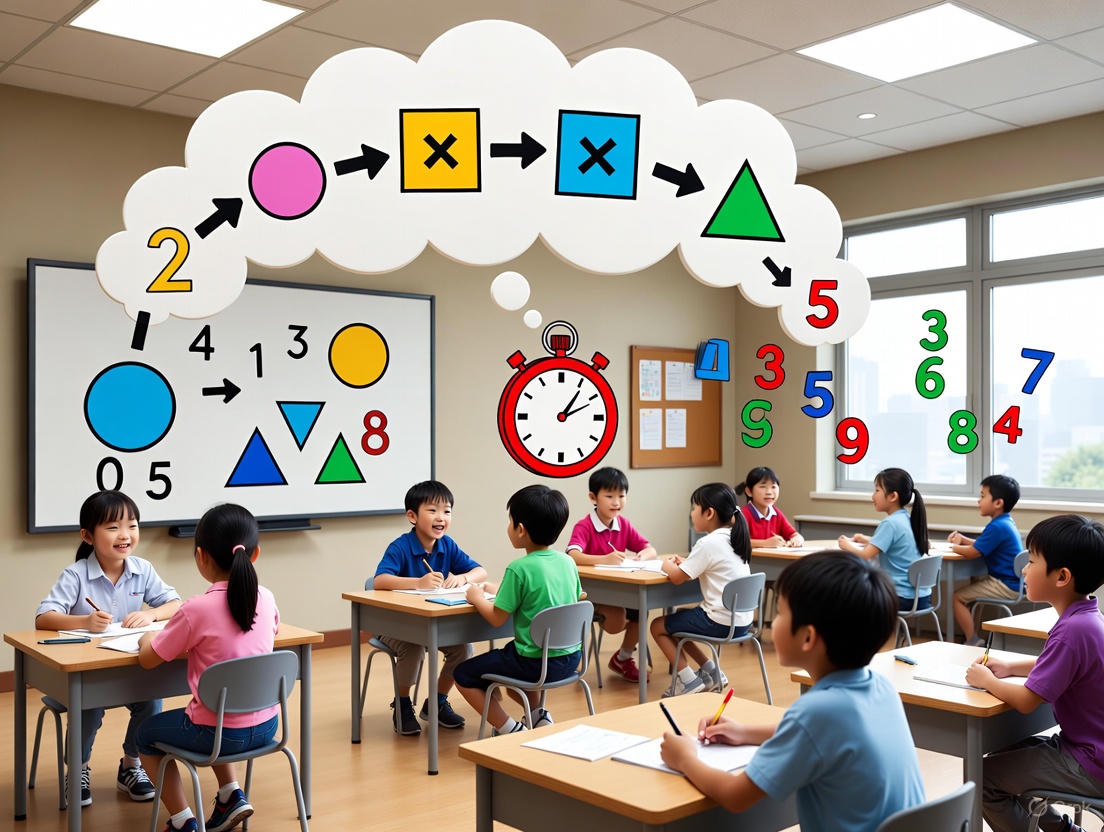
Interesting Fact: The Singapore education system has evolved significantly since independence. From a focus on basic literacy, it has transformed into a system that emphasizes critical thinking and problem-solving skills – especially in mathematics!
Small Group Tuition: Pros and Cons
Individual Tuition: Pros and Cons
History Note: Tuition has been a part of the Singaporean education landscape for decades. It's become increasingly prevalent as parents seek to give their children every possible advantage.
Ultimately, the best choice depends on your child's individual needs, learning style, and your budget. Do your research, talk to other parents, and trust your gut feeling. After all, you know your child best! And remember, bo jio (don't be afraid to ask) for help from friends and family who've been through this before. Good luck, parents! May your child succeed like nobody's business!
Alright, parents, let's talk real. You want the best for your kids, right? Ace those PSLEs, sail through O-Levels, and conquer A-Levels – that's the Singapore dream! And in this super competitive environment, mathematics is king (or queen!). With AI becoming so prevalent, a strong foundation in maths isn't just about grades; it's about future-proofing your child's career. Think coding, data science, engineering... the possibilities are endless, leh!
So, how do you give your Primary 4 kid that extra edge? Tuition, of course! But not all tuition centres are created equal. You want to find one where your child gets the attention they deserve, not just another face in a massive classroom. That's where student-teacher ratio comes in. But how do you find these golden nuggets? By tapping into the wisdom of other parents!
Think of it this way: would you rather your child be one of 30 students vying for the teacher's attention, or one of 10? A smaller class size generally means more individualised attention, more opportunities to ask questions, and a learning environment that's less intimidating for some kids. It's about finding that sweet spot where your child feels comfortable and supported. Here are some subtopics to consider:
A lower student-teacher ratio can lead to better engagement, improved understanding, and ultimately, better grades. Tutors can tailor their teaching to address specific learning gaps and provide more targeted feedback. Plus, it's easier for tutors to spot when a child is struggling and offer timely assistance. This is especially crucial in Primary 4, where foundational concepts are being solidified. In recent times, artificial intelligence has transformed the education sector internationally by enabling personalized educational experiences through flexible algorithms that customize material to individual learner paces and styles, while also mechanizing evaluation and operational duties to liberate instructors for deeper impactful connections. Worldwide, AI-driven tools are closing academic shortfalls in remote locations, such as utilizing chatbots for communication mastery in underdeveloped nations or analytical tools to spot at-risk pupils in European countries and North America. As the incorporation of AI education builds speed, Singapore shines with its Smart Nation initiative, where AI technologies enhance curriculum customization and inclusive instruction for diverse demands, covering special support. This approach not only improves test outcomes and engagement in regional classrooms but also corresponds with global efforts to cultivate ongoing educational skills, equipping pupils for a technology-fueled economy amongst ethical factors like information privacy and just availability.. Don't anyhow choose a Singapore Primary 4 tuition centre; tips from other parents is key!
When researching tuition centres, don't be shy! Ask about their average class size and the student-teacher ratio. Some centres might advertise a low ratio, but it's always good to double-check. Also, consider the teaching style. Does the tutor encourage interaction? Do they make learning fun and engaging? After all, no one wants their child to dread going to tuition. Look for tuition centres that are transparent about their methods and willing to answer your questions. Choosing a Singapore Primary 4 tuition centre tips from other parents can guide you.
Fun fact: Did you know that Singapore's education system consistently ranks among the top in the world? But that also means the competition is fierce! That's why many parents turn to tuition to give their children an extra boost.
Now, let's get to the juicy part: what are other parents saying? Online reviews and testimonials can be a goldmine of information. But you need to know how to read between the lines. Here's what to look for:
Interesting Fact: The tuition industry in Singapore is a multi-million dollar industry! Parents are willing to invest heavily in their children's education, and tuition centres play a significant role in this landscape.
Remember, every child is different. What works for one child might not work for another. But by doing your research and listening to the experiences of other parents, you can increase your chances of finding a tuition centre that's the perfect fit for your child. Good luck, and may the odds be ever in your child's favour!
Alright, lah! Let's get down to brass tacks and talk about something super important for our kids' future – their education. We Singaporean parents, we all want the best for our children, right? We want them to ace those exams, get into good schools, and ultimately, have a bright future. And in this day and age, with AI changing everything, mathematics is more crucial than ever. It's not just about passing exams; it's about equipping them with the skills to thrive in a rapidly evolving world.
That's why choosing the right tuition centre, especially when your child is in Primary 4, is a decision you cannot take lightly. It's a big deal! It's about setting the foundation for their future success. So, let's dive into how to find tuition centres with ideal student-teacher ratios, shall we?
Okay, so you're thinking about choosing a Singapore Primary 4 tuition centre tips, right? One of the biggest things to consider is the class size and the student-teacher ratio. Think about it: if your child is in a class with 30 other students, how much individual attention are they really going to get? Not much, right?
A smaller student-teacher ratio means your child gets more personalized attention. The teacher can better understand their strengths and weaknesses, and tailor their teaching accordingly. This is especially important in Primary 4, when they're building those fundamental math skills. We don't want them to "chope" a seat and then get lost in the crowd, right?
Why is this so important for Mathematics?
Mathematics, unlike some other subjects, often requires a lot of individual practice and problem-solving. A lower student-teacher ratio allows the tutor to:
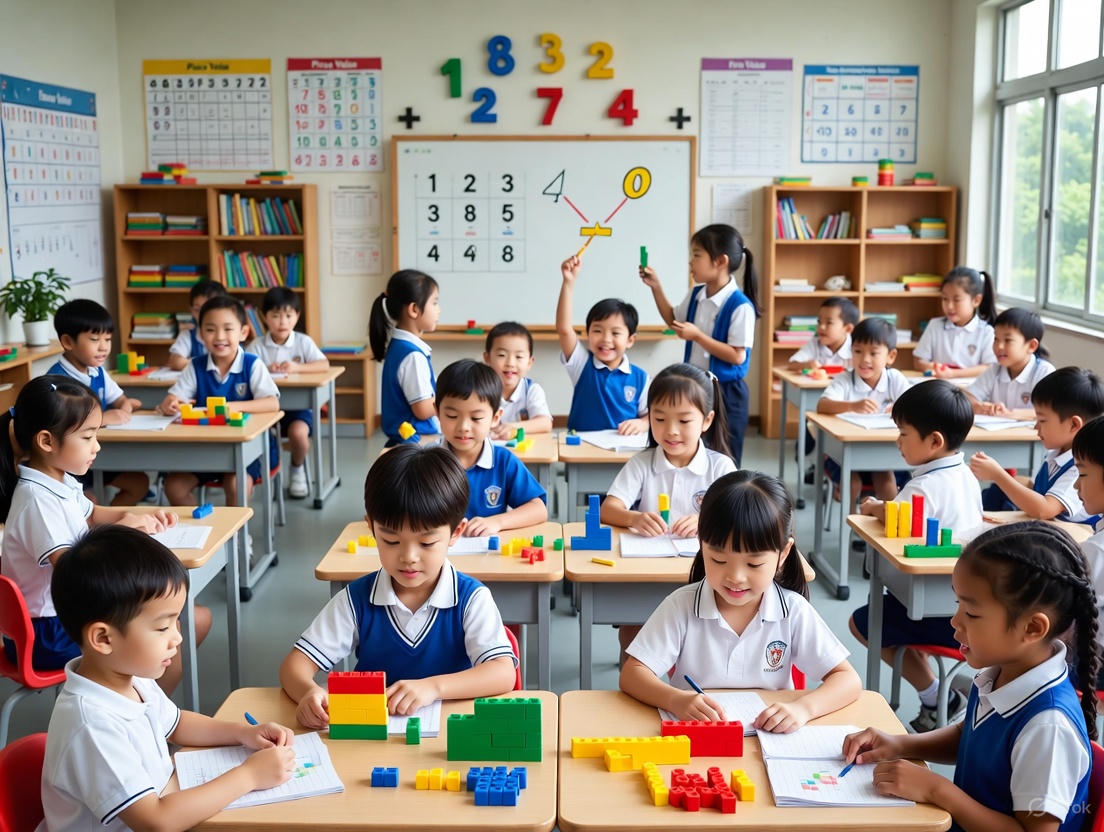
Subtopics to consider:
Fun Fact: Did you know that the Singapore education system is consistently ranked among the best in the world? This is partly due to our emphasis on mathematics and science education from a young age!
Interesting Facts: There is a growing trend in Singapore for parents to send their children for tuition as early as pre-school. This is to give them a head start in their education and to prepare them for the rigors of the Singapore education system.
History: Tuition centres have been a part of the Singapore education landscape for decades. They have evolved from small, informal tutoring sessions to large, organized businesses.
Remember, choosing the right tuition centre is an investment in your child's future. Don't just pick the one that's nearest or the cheapest. Do your research, ask around, and find a centre that truly understands your child's needs and can help them reach their full potential. After all, it's not just about getting good grades; it's about nurturing a lifelong love for learning, especially in mathematics, the language of the future!
A lower student-teacher ratio allows for more individualized attention, which can help Primary 4 students grasp concepts better and receive targeted support.
Ask the tuition centre directly! Most centres will readily provide this information. You can also check their website or marketing materials.
Generally, a ratio of 1:8 or lower is considered ideal for Primary 4, allowing for more personalized instruction and interaction.
Consider the teachers qualifications and experience, the curriculum, the learning environment, and reviews from other parents and students.
You can find reviews on websites like Google Reviews, Facebook, and education-specific platforms. Talk to other parents for recommendations too.
Many tuition centres offer trial classes or consultations. This allows your child to experience the teaching style firsthand and see if it aligns with their learning preferences.